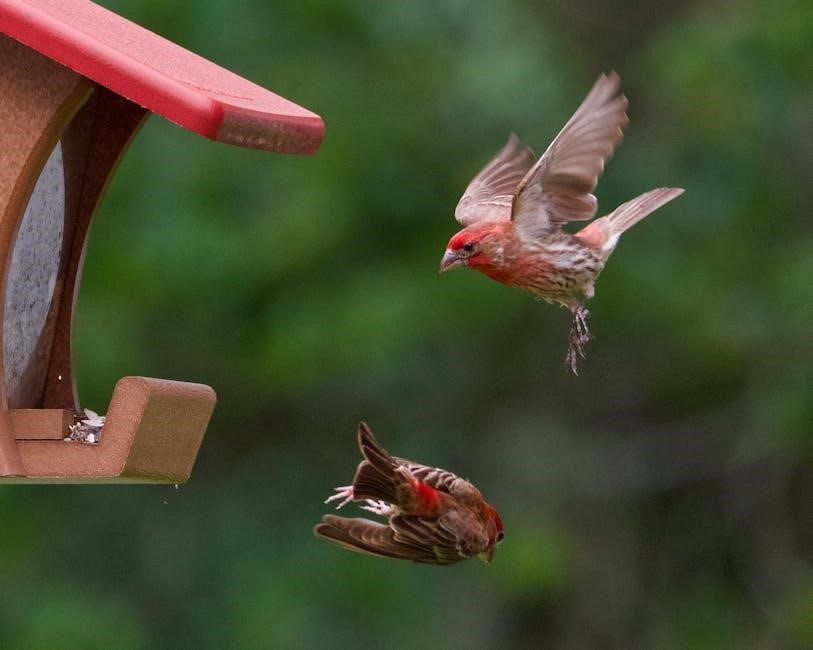
Alabama’s diverse habitats support a remarkable array of avian life, making a comprehensive field guide an invaluable tool for both novice and experienced birdwatchers.
Why a Field Guide is Essential
A reliable field guide is paramount for successful bird identification in Alabama, given the state’s impressive avian diversity – boasting around 420 species. These guides provide detailed illustrations or photographs showcasing plumage variations across different ages and seasons, crucial for accurate identification.
Beyond visuals, a good field guide includes descriptive text covering size, shape, behavior, habitat preferences, and, importantly, vocalizations. Learning to distinguish birds by their songs and calls significantly enhances identification skills.
Furthermore, a field guide aids in understanding seasonal patterns, migration routes, and relative abundance, enriching the birdwatching experience. Without one, distinguishing between similar species becomes incredibly challenging, hindering appreciation of Alabama’s feathered inhabitants. It’s a key to unlocking the secrets of the avian world!
Alabama’s Avian Diversity: An Overview
Alabama’s varied landscapes – from coastal marshes to Appalachian forests – foster exceptional avian biodiversity. The state is a crucial migratory corridor, attracting numerous species during spring and fall. Approximately 420 bird species have been recorded within its borders, representing a significant portion of North American avifauna.
Passerines dominate the state’s birdlife, with warblers, sparrows, and finches being particularly abundant. However, Alabama also supports healthy populations of waterfowl, raptors, and wading birds. The presence of both resident and migratory species contributes to this rich tapestry.
Understanding this diversity is key to appreciating Alabama’s ecological health. Conservation efforts are vital to protect habitats and ensure the continued presence of these magnificent creatures, making a field guide an essential tool for informed observation and advocacy.
Common Bird Families in Alabama
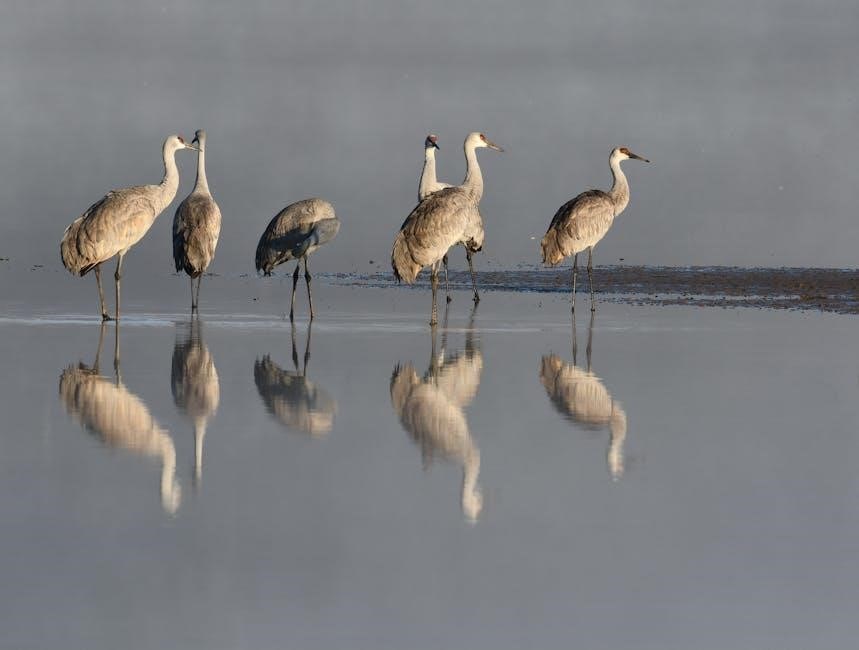
Alabama’s bird families include passerines, waterfowl, and raptors, each uniquely adapted to the state’s diverse environments, offering exciting identification challenges.
Passerines (Perching Birds)
Passerines, commonly known as perching birds, represent the most diverse order in Alabama, boasting over half of the state’s bird species. This incredibly varied group includes familiar favorites like the Northern Cardinal, Eastern Bluebird, and numerous warblers, sparrows, and finches. Their defining characteristic is a foot structure adapted for perching, with three toes pointing forward and one backward, providing a secure grip on branches.
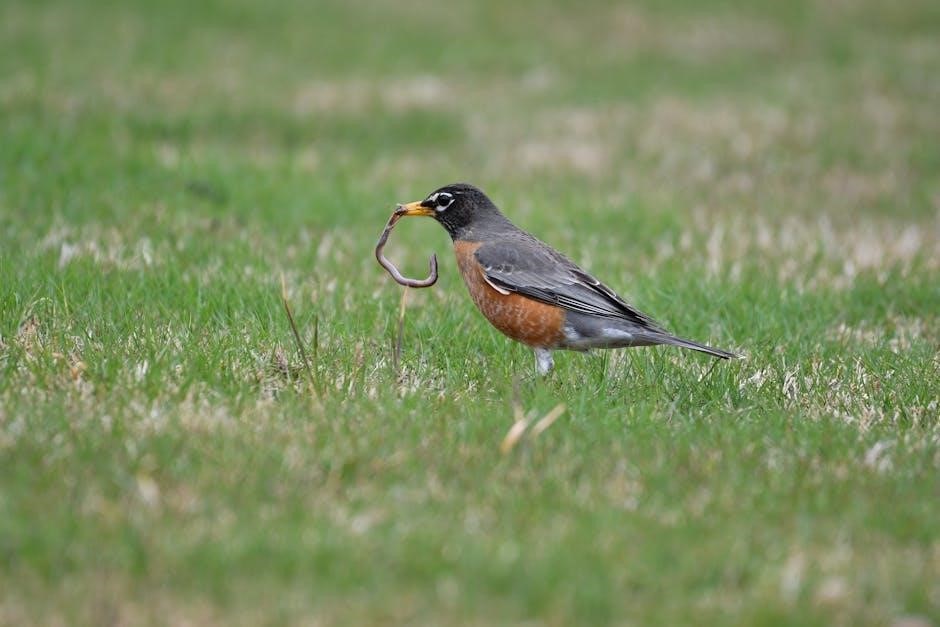
Identifying passerines often relies on subtle plumage details, size variations, and, crucially, their complex songs. Alabama’s forests and woodlands are particularly rich in passerine life, offering ample opportunities for observation. Many species are insectivores, playing a vital role in controlling insect populations, while others consume seeds and berries. Understanding their foraging habits and preferred habitats is key to successful identification in the field.
Waterfowl: Ducks, Geese, and Swans
Alabama’s diverse wetlands and waterways attract a variety of waterfowl, including ducks, geese, and swans, particularly during migration. These birds are readily identified by their webbed feet, flattened bills, and generally aquatic lifestyles. Common duck species include Mallards, Wood Ducks, and Teal, while Canada Geese are frequently observed in fields and along rivers. Though less common, Tundra Swans occasionally grace Alabama’s lakes and marshes.
Waterfowl identification often focuses on plumage patterns, bill shape, and flight characteristics. Observing their feeding behaviors – diving for submerged vegetation or dabbling at the surface – can also provide clues. These birds play an important ecological role, contributing to nutrient cycling and seed dispersal within wetland ecosystems. A good field guide will detail seasonal variations in plumage, aiding accurate identification throughout the year.
Raptors: Hawks, Eagles, and Owls
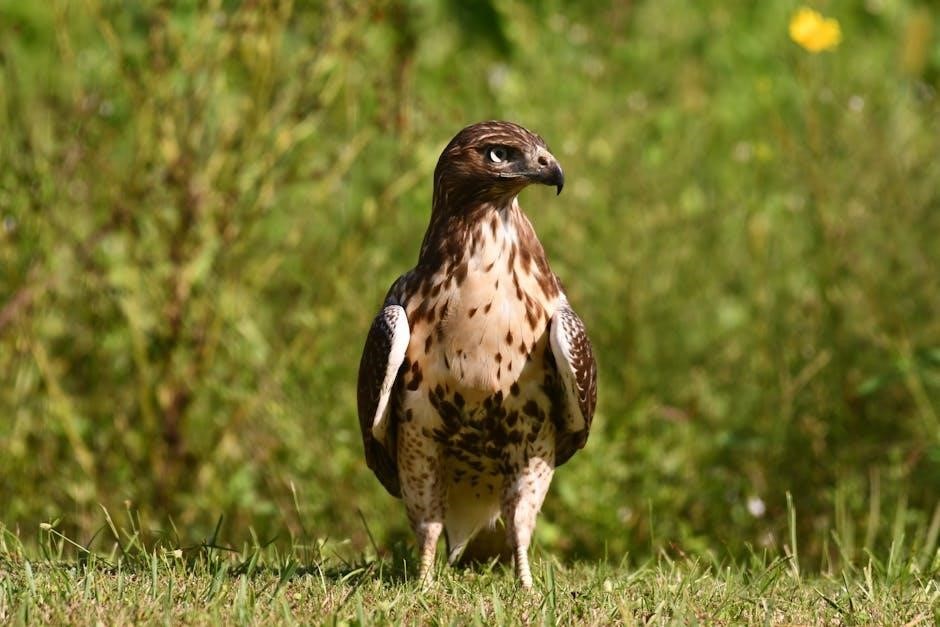
Alabama’s skies are patrolled by magnificent raptors – hawks, eagles, and owls – apex predators crucial to maintaining ecological balance. Identifying these birds requires attention to size, wingshape, and flight patterns. Red-tailed Hawks are commonly seen soaring over open fields, while Sharp-shinned Hawks favor forested areas. The majestic Bald Eagle, a symbol of national pride, nests along waterways and is increasingly common in Alabama.
Owls, nocturnal hunters, present a different identification challenge. Great Horned Owls and Barred Owls are frequently encountered, distinguished by their calls and facial discs. A field guide detailing plumage variations – especially in juvenile birds – is essential. Observing hunting techniques, such as soaring, diving, or perching, further aids identification. Understanding raptor behavior enhances the birdwatching experience.
Identifying Birds by Physical Characteristics
Careful observation of size, shape, plumage, and bill structure are key to accurate bird identification, especially when utilizing a detailed Alabama field guide.
Size and Shape
Determining a bird’s size is often the first step in identification; compare it to familiar birds like robins or crows. Shape, encompassing overall body form and proportions, is equally crucial. Is the bird compact or slender? Does it have a long or short neck?
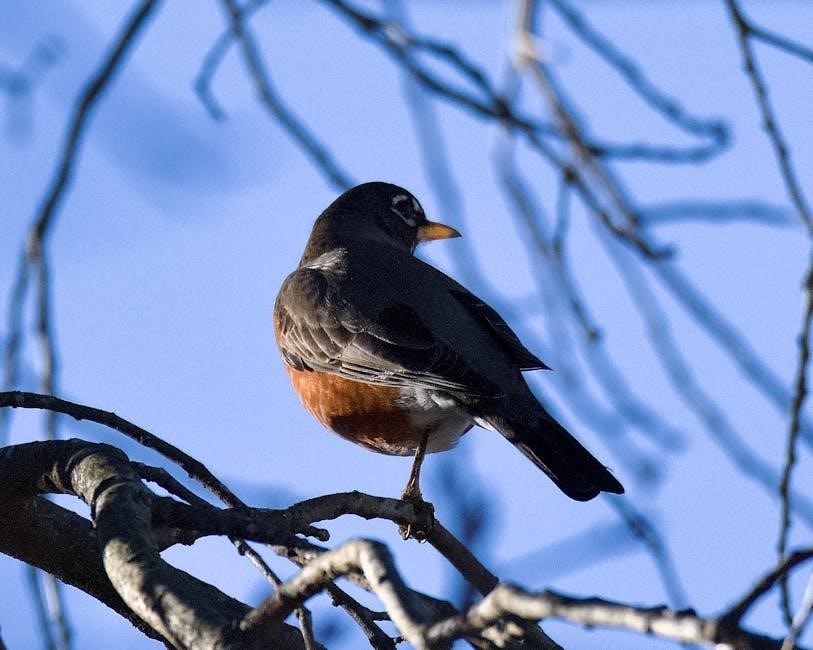
Consider the bill’s length and thickness relative to the head size. Wing shape also provides clues – pointed wings suggest swift flight, while rounded wings indicate maneuverability. A field guide dedicated to Alabama birds will illustrate these variations, offering comparative images and descriptions.
Pay attention to posture; some birds stand upright, while others adopt a more horizontal stance. Observing these physical attributes, alongside habitat and behavior, significantly narrows down potential species when using your Alabama bird field guide.
Plumage Coloration and Patterns
Plumage is a key identifier, but color descriptions can be subjective. A good Alabama bird field guide uses standardized terms – “rufous” instead of “reddish-brown,” for example. Note the distribution of colors: is the bird uniformly colored, or does it have distinct patches, streaks, or bars?
Pay close attention to patterns like wing bars, eye stripes, or breast spots. Consider seasonal variations; some birds change plumage during breeding season or migration. Juvenile plumage often differs significantly from adult coloration.
Lighting conditions can affect how colors appear, so observe birds in good light. Your field guide will illustrate these variations, showing plumage differences between sexes and age groups, aiding accurate identification of Alabama’s diverse birdlife.
Bill Shape and Function
A bird’s bill is remarkably adapted to its diet. An Alabama field guide highlights these correlations. Long, slender bills are typical of nectar-sipping birds like hummingbirds, while short, conical bills indicate seed-eaters like finches.
Hooked bills characterize raptors, designed for tearing flesh. Shorebirds possess long, probing bills for foraging in mudflats. Ducks exhibit broad, flat bills with lamellae for filtering food from water.
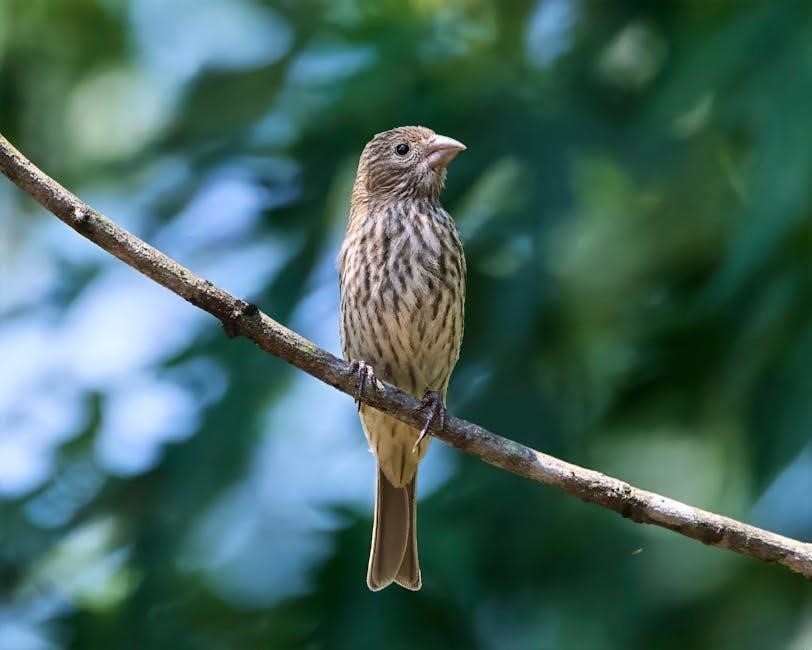
Observe the bill’s length, thickness, and curvature. Is it decurved (downward-bending), or upturned? These subtle differences are crucial for identification. Your field guide will illustrate bill shapes alongside dietary habits, helping you understand how form follows function in Alabama’s avian world.
Habitat and Behavior
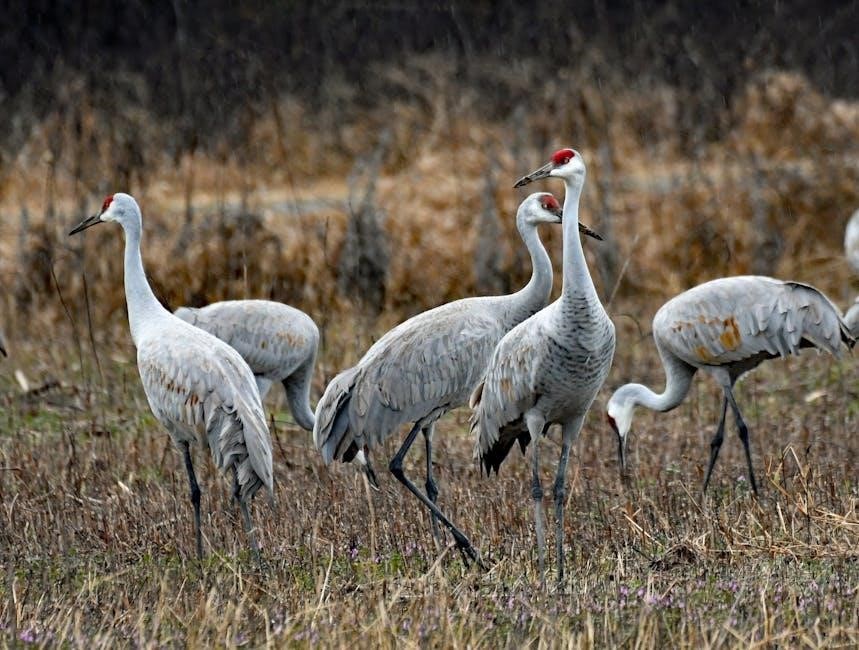
Understanding where birds live and how they act is key; an Alabama field guide details these patterns, revealing fascinating insights into avian lifestyles.
Birds of Forests
Alabama’s forests, ranging from pine plantations to hardwood bottomlands, teem with diverse birdlife. A quality field guide will highlight species like the Northern Cardinal, frequently spotted flitting amongst branches, and the Eastern Bluebird, a vibrant presence in open woodlands.
Look for the distinctive calls of woodpeckers, diligently searching for insects within tree bark. Warblers, often challenging to identify, migrate through Alabama’s forests, adding splashes of color to the canopy. The guide will aid in distinguishing between similar species based on plumage details and vocalizations.
Understanding forest structure – canopy height, understory density – helps predict which birds you might encounter. Many forest birds are insectivores, playing a crucial role in controlling pest populations. The field guide will also detail nesting habits and preferred food sources, enhancing your observational skills.
Birds of Wetlands and Waterways
Alabama’s extensive wetlands – marshes, swamps, rivers, and coastal areas – provide critical habitat for a stunning variety of birds. A reliable field guide is essential for identifying species like the Great Blue Heron, often seen wading patiently in shallow waters, and various duck species, diving for sustenance.
Observe the elegant flight of egrets and the powerful presence of Bald Eagles soaring overhead. Waterfowl identification relies heavily on recognizing subtle differences in plumage, bill shape, and size, features detailed within a good field guide.
Pay attention to bird behavior – feeding strategies, flocking patterns – to aid identification. Many migratory birds utilize Alabama’s waterways as crucial stopover points, making these areas hotspots for birdwatching. The guide will also explain the ecological importance of these wetland ecosystems.
Birds of Grasslands and Fields
Alabama’s open grasslands and agricultural fields host a unique assemblage of birdlife, often overlooked but incredibly diverse. A field guide becomes indispensable for distinguishing between similar-looking species inhabiting these environments. Look for Eastern Meadowlarks, identifiable by their bright yellow breasts and melodic songs, and various sparrow species, requiring careful attention to plumage details.
Raptors like the Red-tailed Hawk frequently patrol these areas, soaring high above in search of prey. Understanding their hunting behaviors, detailed in a good field guide, aids identification. Observe how birds utilize different field structures – hedgerows, fence lines – for perching and nesting.
Pay close attention to foraging techniques and vocalizations, as these can be key identifiers. These habitats are also important for migrating birds, increasing species diversity throughout the year.
Specific Bird Species to Look For
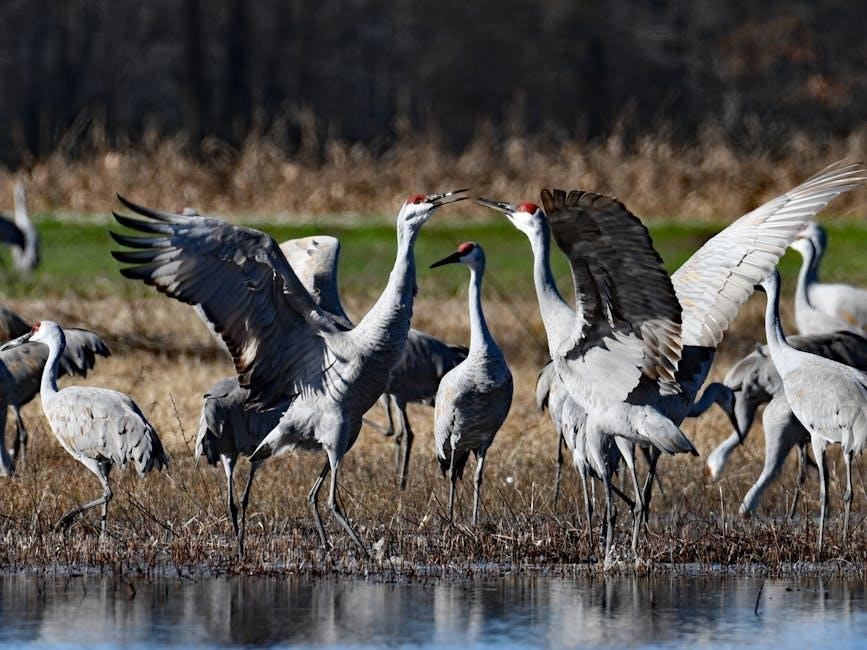
Alabama’s birdlife includes iconic species like the Northern Cardinal, Eastern Bluebird, Bald Eagle, Great Blue Heron, and Red-tailed Hawk – focus your field guide efforts!
Northern Cardinal
The Northern Cardinal (Cardinalis cardinalis) is a strikingly beautiful bird, instantly recognizable by the male’s vibrant red plumage. Females exhibit a more subdued, reddish-brown coloration with red accents. These birds are year-round residents throughout Alabama, adding a splash of color to gardens, woodlands, and shrublands even during winter months.
Cardinals are relatively easy to attract to backyard feeders, readily consuming sunflower seeds, safflower seeds, and peanuts. Their strong, conical bills are perfectly adapted for cracking seeds. Listen for their clear, whistling song, a cheerful melody often heard throughout the year. They are frequently observed foraging on the ground or perched conspicuously in shrubs and trees. Observing their behavior with a field guide enhances appreciation.
Cardinals are monogamous and form strong pair bonds, often remaining together for life. They are also cavity nesters, utilizing tree hollows, dense shrubs, or even man-made nest boxes. A field guide will help you identify juvenile plumage and understand their nesting habits.
Eastern Bluebird
The Eastern Bluebird (Sialia sialis) is a beloved symbol of happiness and springtime in Alabama. Males boast brilliant blue upperparts and a rusty-red breast, while females display more muted blue and gray tones. These cavity nesters are commonly found in open woodlands, orchards, and fields with scattered trees throughout the state.
Bluebirds are insectivores, primarily feeding on grasshoppers, caterpillars, and other invertebrates during the breeding season. They readily utilize nest boxes, making them a popular species for backyard bird enthusiasts. A field guide will aid in distinguishing them from similar-looking species like the Indigo Bunting.
Their melodious, warbling song is a welcome sound in rural landscapes. Observing their courtship displays and nesting behavior with a field guide provides a deeper understanding of their life cycle. Conservation efforts, including nest box programs, have helped restore bluebird populations in Alabama.
Bald Eagle
The Bald Eagle (Haliaeetus leucocephalus), a majestic national symbol, has made a remarkable recovery in Alabama. Once endangered, these magnificent birds are now increasingly sighted near waterways and large lakes. Adult eagles are easily identified by their striking white head and tail feathers contrasting with a dark brown body.
Eagles are powerful predators, primarily feeding on fish, which they skillfully snatch from the water. A field guide will help differentiate them from other large raptors like the Red-tailed Hawk, particularly juveniles which lack the full adult plumage. They build massive nests, often reusing them for years.
Observing eagles soaring overhead or perched in trees is a truly awe-inspiring experience. Their presence signifies a healthy ecosystem. A field guide enhances appreciation for their behavior and contributes to their continued conservation within Alabama’s diverse landscapes.
Great Blue Heron
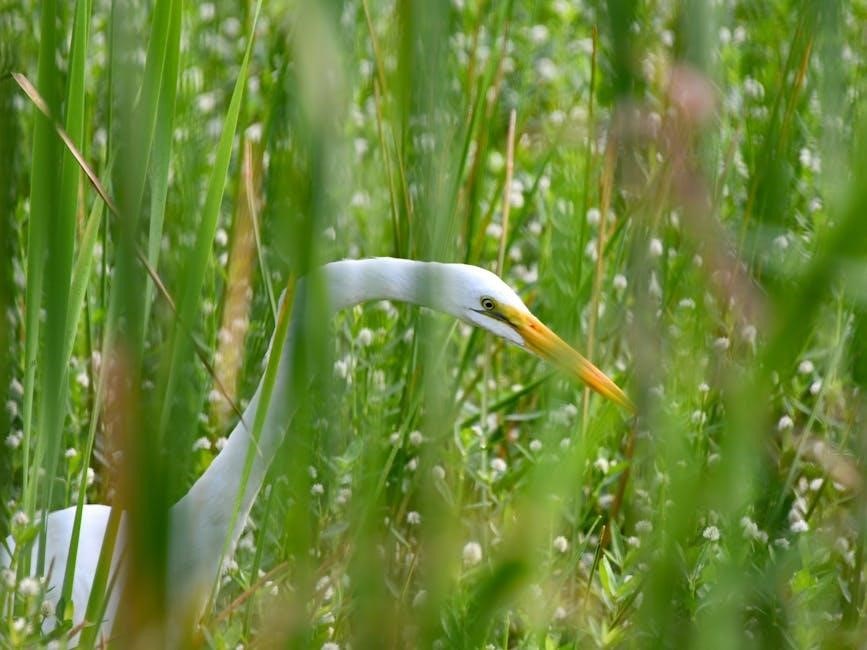
The Great Blue Heron (Ardea herodias) is a common sight in Alabama’s wetlands, marshes, and along waterways. This stately bird is easily recognized by its large size, long legs, and bluish-gray plumage. A field guide is crucial for distinguishing it from similar herons, like the Great Egret, which is entirely white.
Herons are patient hunters, often standing motionless for extended periods before striking at fish, frogs, or other aquatic prey with their sharp bills. They nest in colonies, building bulky nests high in trees. Observing their graceful flight and hunting techniques is a rewarding experience.
A reliable field guide will detail their varied calls and behaviors, enhancing your birdwatching experience. Their adaptability makes them a resilient species, but habitat preservation remains vital for their continued success in Alabama.
Red-tailed Hawk
The Red-tailed Hawk (Buteo jamaicensis) is a frequently observed raptor throughout Alabama, soaring high above forests, fields, and even urban areas. A quality field guide is essential for accurate identification, as juvenile plumage differs significantly from the adult’s characteristic reddish-brown tail.
These hawks are powerful hunters, preying on rodents, rabbits, and other small mammals. They often perch conspicuously on roadside poles or trees, scanning for prey. Learning to recognize their distinctive, piercing scream – often used in film to represent eagles – is a key identification skill.
Field guides will also detail variations in coloration and size across different regions. Conservation efforts are important to protect their nesting sites and ensure healthy prey populations for this magnificent bird of prey.
Bird Song and Calls
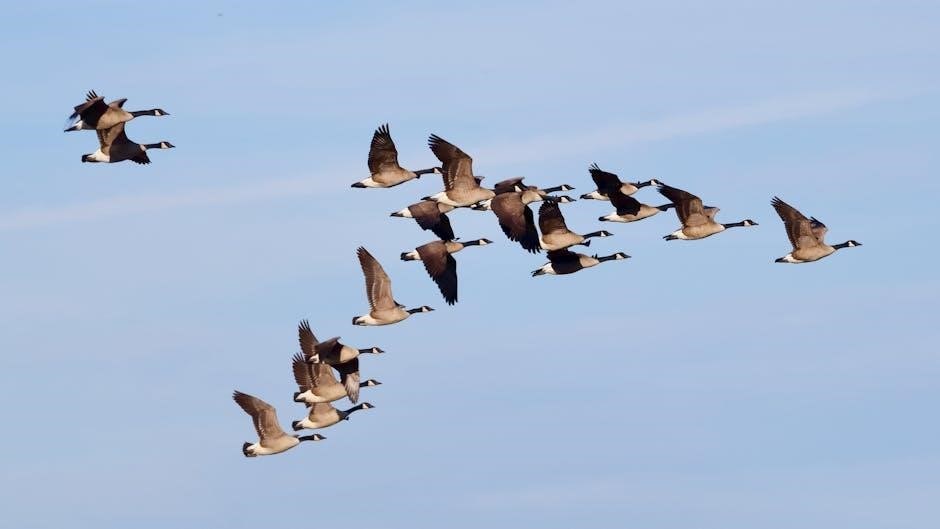
Mastering bird vocalizations unlocks a new dimension of identification; apps and resources help decipher the complex melodies and calls of Alabama’s birds.
Using Bird Song Identification Apps
Modern technology dramatically simplifies bird song identification, offering accessible tools for all skill levels. Numerous smartphone applications utilize sophisticated algorithms to analyze recordings of bird vocalizations, providing potential matches from extensive databases. These apps often display detailed information about each species, including images, range maps, and additional audio samples, enhancing the learning experience.
Popular choices include options suitable for various age ranges, allowing users to record sounds directly or upload pre-existing audio files. Some apps even offer offline functionality, crucial for birding in areas with limited connectivity. While incredibly helpful, remember that app identifications aren’t always perfect; cross-referencing with field guides and experienced birders remains essential for accurate confirmation. Utilizing these apps alongside traditional methods creates a powerful and rewarding birding experience.
Learning Common Alabama Bird Calls
Beyond apps, actively learning the calls of common Alabama birds significantly enhances identification skills. Start with frequently encountered species like the Northern Cardinal, Eastern Bluebird, and Red-tailed Hawk, focusing on their distinct vocalizations. Online resources provide audio recordings and descriptions of various calls – songs, chips, and alarm calls – aiding in differentiation.
Consistent practice is key; regularly listen to recordings while reviewing field guide illustrations. Venture outdoors and attempt to match sounds to visible birds, gradually expanding your repertoire. Consider joining local birding groups or attending workshops led by experienced birders. These opportunities provide valuable mentorship and collaborative learning experiences. Mastering bird calls unlocks a deeper understanding of avian behavior and communication, enriching your overall birding journey.
Where to Find Birds in Alabama
Alabama’s state parks, wildlife refuges, and dedicated bird preserves offer prime birdwatching locations, providing diverse habitats for numerous species.
State Parks and Wildlife Refuges
Alabama’s extensive network of state parks and wildlife refuges provides exceptional opportunities for bird observation. Parks like Gulf State Park, with its diverse coastal habitats, attract migrating songbirds and shorebirds, while refuges such as the Bon Secour National Wildlife Refuge offer crucial nesting grounds for various species.
These protected areas often feature well-maintained trails, observation towers, and informative signage, enhancing the birdwatching experience. Many parks host guided bird walks led by knowledgeable naturalists, perfect for beginners seeking assistance with identification. Wildlife refuges, managed by the U.S. Fish and Wildlife Service, prioritize habitat conservation, ensuring thriving bird populations. Remember to check park websites for specific birding hotspots and seasonal migration patterns before your visit, maximizing your chances of spotting Alabama’s avian treasures.
Bird Preserves and Sanctuaries
Alabama boasts several dedicated bird preserves and sanctuaries, offering focused conservation efforts and prime birding locations. These areas, often managed by local Audubon Society chapters or conservation organizations, prioritize habitat restoration and protection for specific bird species. The Birmingham Audubon Society’s Ruffner Mountain Nature Preserve, for example, provides a haven for migrating warblers and resident woodland birds.
Visiting these sanctuaries allows birders to support vital conservation work while enjoying undisturbed natural environments. Many offer specialized tours and educational programs, deepening understanding of avian ecology. Remember to adhere to preserve guidelines, respecting sensitive habitats and minimizing disturbance to nesting birds. These sanctuaries represent crucial strongholds for Alabama’s birdlife, offering peaceful retreats for both birds and birdwatchers alike.
Best Times for Birdwatching in Alabama
Spring and fall migration represent peak times for birdwatching in Alabama, as countless species pass through the state. April and May witness a surge in warblers, tanagers, and other colorful neotropical migrants, while September and October bring raptor migrations and shorebird concentrations. Early mornings generally offer the most activity, as birds are actively foraging and singing.
Winter birding can also be rewarding, with resident species and winter visitors like ducks and geese abundant in wetlands. Summer provides opportunities to observe breeding birds, though heat and humidity can present challenges. Checking recent bird sighting reports online before your visit can maximize your chances of seeing specific target species. Planning around weather conditions is also crucial for a comfortable and productive birding experience.
Conservation Status of Alabama Birds
Several Alabama bird species face threats due to habitat loss and other factors, necessitating conservation efforts to protect their populations and ensure their survival.
Threatened and Endangered Species
Alabama is home to a number of bird species currently listed as threatened or endangered, requiring focused conservation attention. The Red Knot, for instance, faces significant challenges due to habitat loss along its migratory routes. Similarly, the Wood Stork, dependent on wetland ecosystems, is vulnerable to drainage and development.
The Bachman’s Sparrow, a ground-nesting bird, suffers from habitat fragmentation and fire suppression impacting its preferred pine savanna landscapes. Monitoring programs are crucial for tracking population trends of these vulnerable species. Protecting critical habitats, implementing responsible land management practices, and addressing threats like pesticide use are vital steps.
Furthermore, public awareness and participation in citizen science initiatives play a key role in supporting conservation efforts for these precious avian inhabitants of Alabama. Understanding their specific needs is paramount for effective protection.
How to Help Protect Alabama Birds
Protecting Alabama’s birdlife requires a multifaceted approach, starting with habitat preservation. Supporting organizations dedicated to land conservation and advocating for responsible development are crucial steps. Reducing pesticide use in your yard and opting for native plants provides vital food sources and shelter.
Consider creating a bird-friendly backyard with feeders, water sources, and nesting boxes. Keep cats indoors to prevent predation, a significant threat to bird populations. Participate in citizen science projects like bird counts, contributing valuable data for research and monitoring.
Educate yourself and others about the importance of bird conservation, spreading awareness about the challenges they face. By making conscious choices and actively engaging in conservation efforts, we can ensure a thriving future for Alabama’s avian diversity.